AI Service for Electric Travel
An AI assistant plans the electric journey around the charge already in the car, and books the charging stops the trip needs. For Shell, every planned trip is a customer kept and a data point about where to build next.
Problem
Shell sells fuel, and its app was built around finding a station. An electric car changes that. Charging takes longer than refuelling, and drivers plan where to stop before setting off rather than when the tank runs low. Shell brought in a team to work out what its app should be for electric drivers, and what would keep them charging on Shell’s network rather than the one next to it.
Product strategy
In twelve weeks, the team interviewed thirty drivers and designed and tested four concepts. The interviews showed that drivers worked the whole trip out themselves before setting off, across separate apps: which chargers were on the way, whether they fitted the car, whether one would be free, and what each stop cost in time. They also said the same complexity had kept them off fully electric, because they did not believe they could make long journeys. It was not friction on the drive. It was a reason not to buy the car.
Key figures
End to end product direction
Tested concepts
The team put its concepts in front of drivers. Drivers picked the route planner, which went forward; the others explored how an app changes once the car is electric.
01The route planner, the concept that went forward
The driver gives the destination. The assistant works out the energy the route needs against the charge in the car, proposes chargers only where the trip needs them, and books them. It is the one running at the top of this page.
02Shell Go+, deals and plans with partners
We wanted the app to give drivers a reason to open it beyond the station. So the app presents partnership deals, and Shell Go+ lets the driver collect points to spend on them.
03While you charge
A charge takes forty minutes, so we designed things for drivers to do while they wait. The wait also creates a business opportunity, with partners paying for visibility in the app.
04Save Energy mode
We wanted a gentle way to remind the driver that the battery is low. Below 10% charge the app turns into energy-saving mode, and it gives directions to the nearest charging stations.
05The charging receipt
In the user interviews, drivers expressed doubt whether an electric car would pay off. Because of this, every session ends with a receipt: what it cost, what it saved against petrol, and the CO₂ it avoided.
Solution
An assistant plans the trip and books the charging. It knows the charge in the car and what the route needs.
The home shows the car first
Charge, range and the nearest Shell station. Planning a trip is one button away.
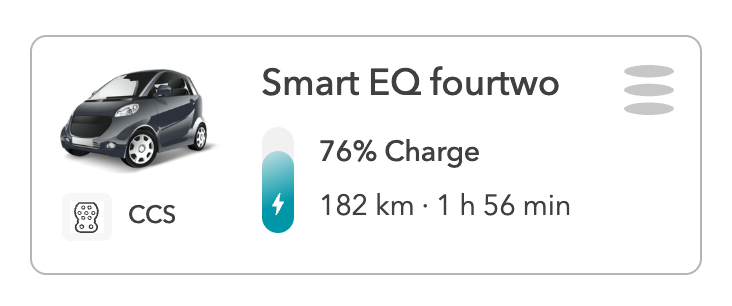 Charge left, read from the carRange and time to emptyConnector type
- Charge left, read from the car
- Range and time to empty
- Connector type
The assistant asks where you are going
One question. The driver never picks chargers.
 One question, a destination
- One question, a destination
The route shows the energy it needs
Distance, time and how many charges.
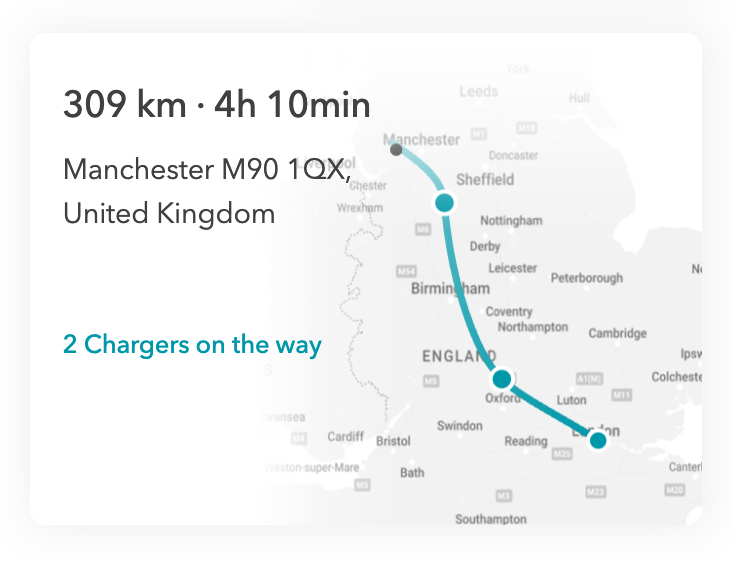 Distance and timeCharges neededThe stops on the route
- Distance and time
- Charges needed
- The stops on the route
Chargers appear only where needed
Each stop is a card with distance, price and speed.
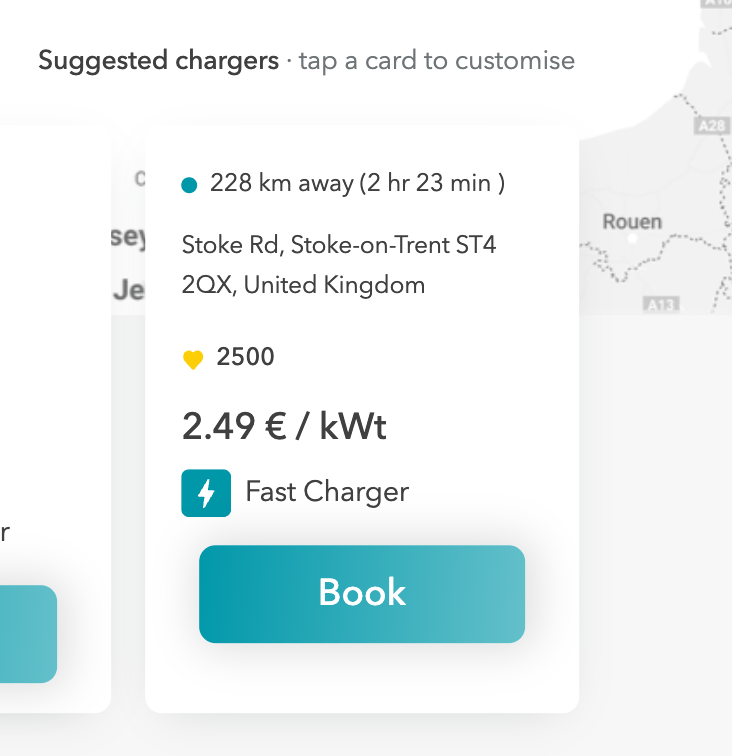 Tap a card to change a stopDistance and time to the stopPrice, shown before bookingBook the stop
- Tap a card to change a stop
- Distance and time to the stop
- Price, shown before booking
- Book the stop
One confirmation books all stops
The assistant asks once. Each charger is reserved for the arrival time.
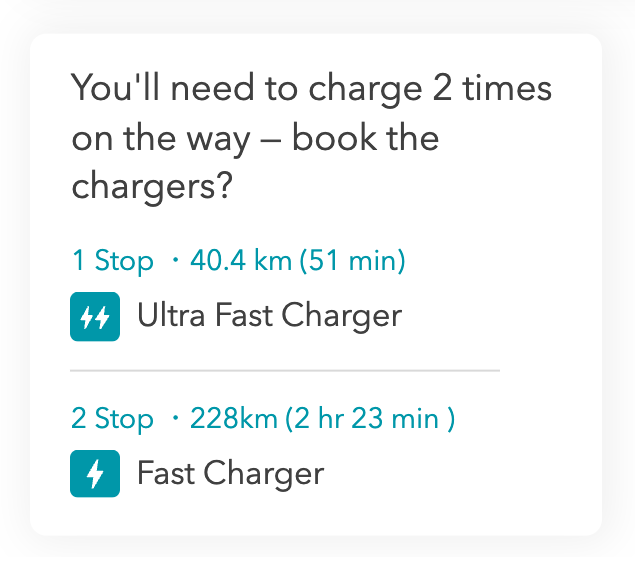 One question for all the stopsDistance and time to the stopCharger speed
- One question for all the stops
- Distance and time to the stop
- Charger speed
The assistant confirms the booking
It will remind the driver when a stop is close.
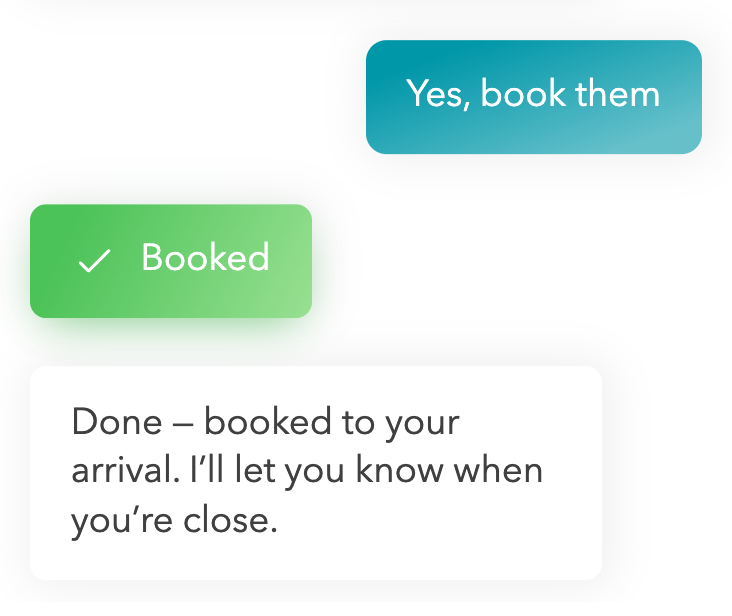 The driver confirms onceBooked, held to arrivalThe assistant follows up on the road
- The driver confirms once
- Booked, held to arrival
- The assistant follows up on the road
Business impact
Every planned trip runs through Shell’s network
The assistant proposes and books Shell chargers, so a driver who plans with it charges with Shell. Every trip it plans is a customer kept from the competitors along the same road.
A service that makes the electric car easy to live with
A driver who can set off on a long trip without planning it has one less reason to doubt the car. Once the car is electric, Shell’s product is the charge, and the app is where the driver meets it. Making the trip easy is what keeps that driver on Shell’s network, and it turns a station brand into the company that makes electric travel work.
Data in service of business planning
Every booking tells Shell where a driver will charge, and when. Added together, the bookings show which routes carry the most traffic and which stations run full. That lets Shell plan its network on real demand: where to build next, where to expand, and which locations to skip.
The same data serves partners. A charging driver has forty minutes to spend nearby, so a booking also tells a local business who is arriving, and when.